Mazes, Maps, Glyphs and a Space City
After the Commodore 64 it’s back to this century. A pile of Python scripts had been building up in my Google Drive, some drawing fractals and some not. I had Claude fetch them, sort out which were older copies of things already in my fractals repo, install the packages they needed, run them and write them up in the README.
Most of them aren’t fractals at all, so the repo’s name is now a bit of a fib. What they share is the seed: give a script the same number and you get the same picture, or leave it out and see what turns up.
Mazes
maze.py draws maze posters. Every maze is “perfect”, meaning there’s exactly one route between any two cells. You can pick how it’s carved:
- Backtracker wanders at random and backs up when it gets stuck, giving long, twisty corridors.
- Aldous-Broder wanders purely at random and carves a passage the first time it visits each cell. It’s unbiased, but slow.
- Wilson uses random walks with the loops erased. It’s also unbiased, and quicker.
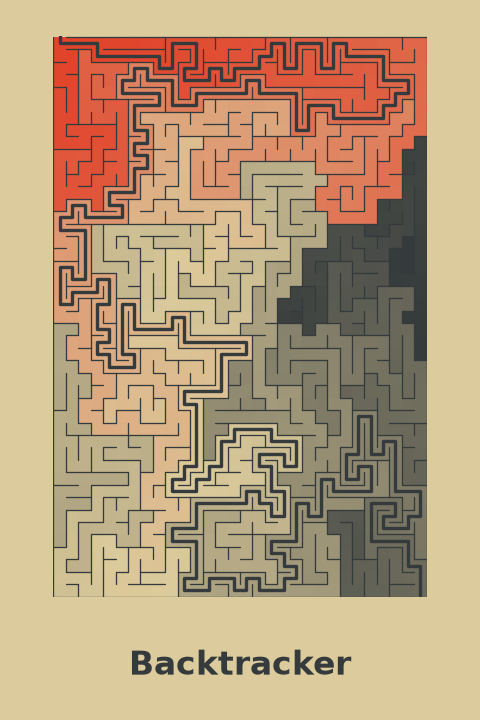 |
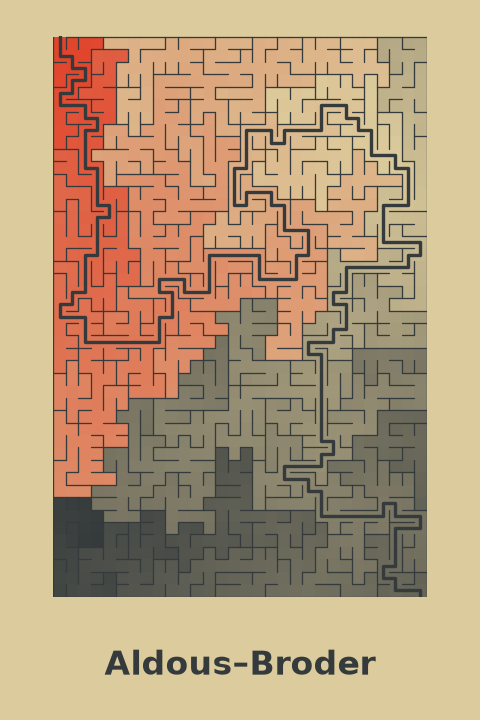 |
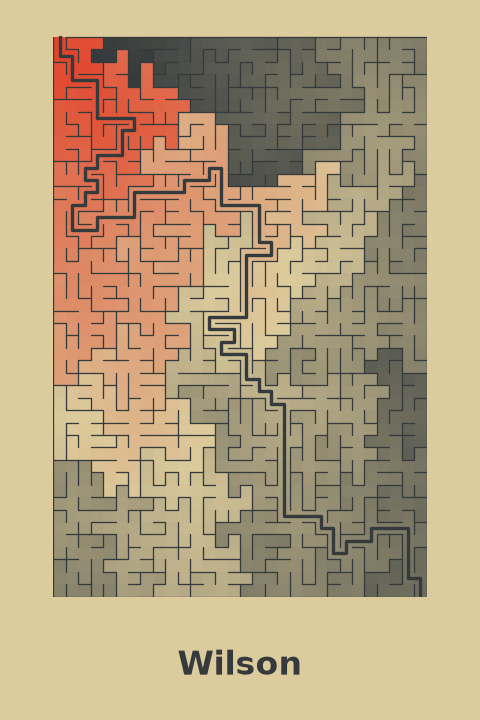 |
| Backtracker | Aldous-Broder | Wilson |
The colours show how far each cell is from the entrance, and the dark line is the solution. There’s a plainer style too, with just the walls and the way through:
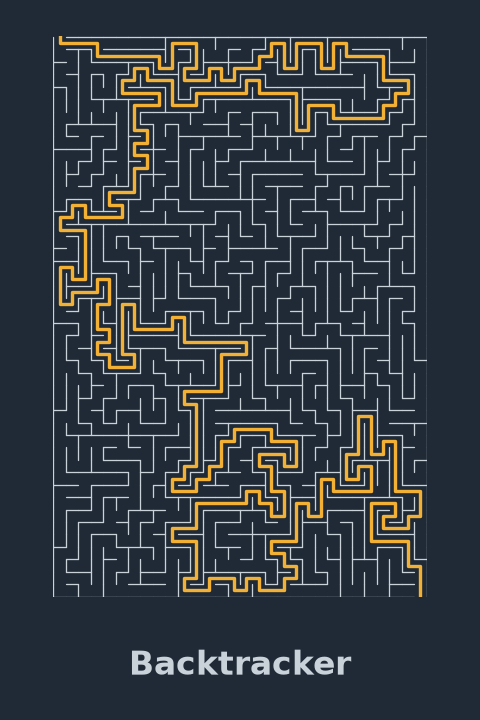
Cats
cat_maze.py is less use for getting anywhere. It’s a pattern of thick right-angled meanders with blocky black cats hidden in it, sitting, lying down and hanging upside down. There are 13 cats in this one:
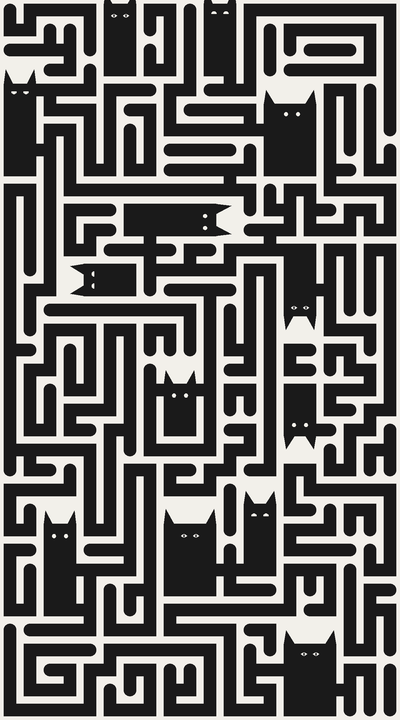
It works on a grid. Every free point is a black square, and joining two neighbours fills the gap between them. The white channels are the gaps that never get joined, so they’re all the same width, which gives it a lino-cut look.
City maps
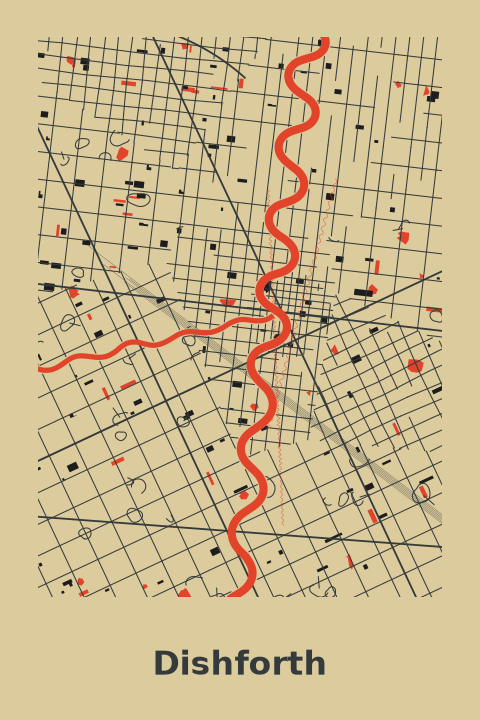
citymap.py makes minimalist map posters of cities that don’t exist, with rivers, railways, parks and street grids that don’t quite line up. It makes up a name if you don’t give it one.
 |
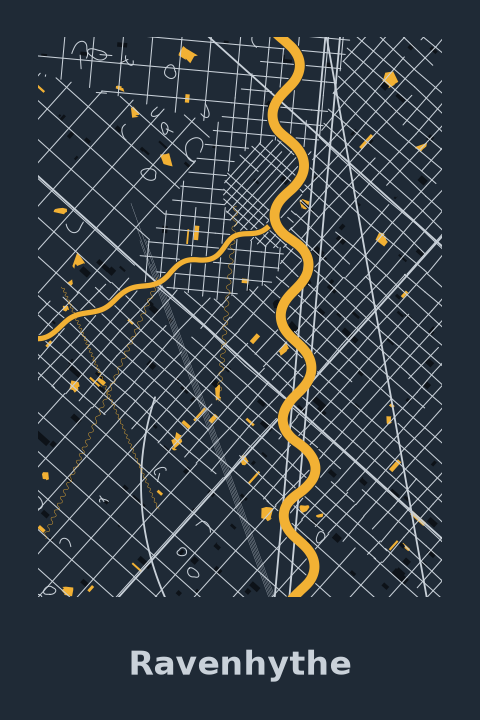 |
| Not the real Dishforth | The night palette |
Alien handwriting
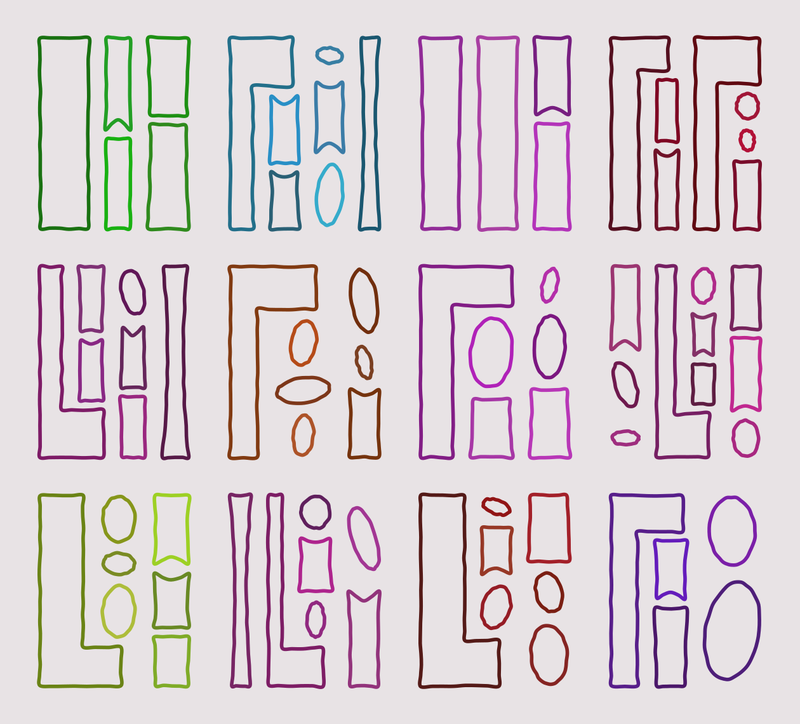
glyphs.py draws sheets of an imaginary script. Each glyph is split into columns, and each column is stacked with bars, blocks and ovals. Everything is wobbled, with white streaks like a felt-tip running dry.
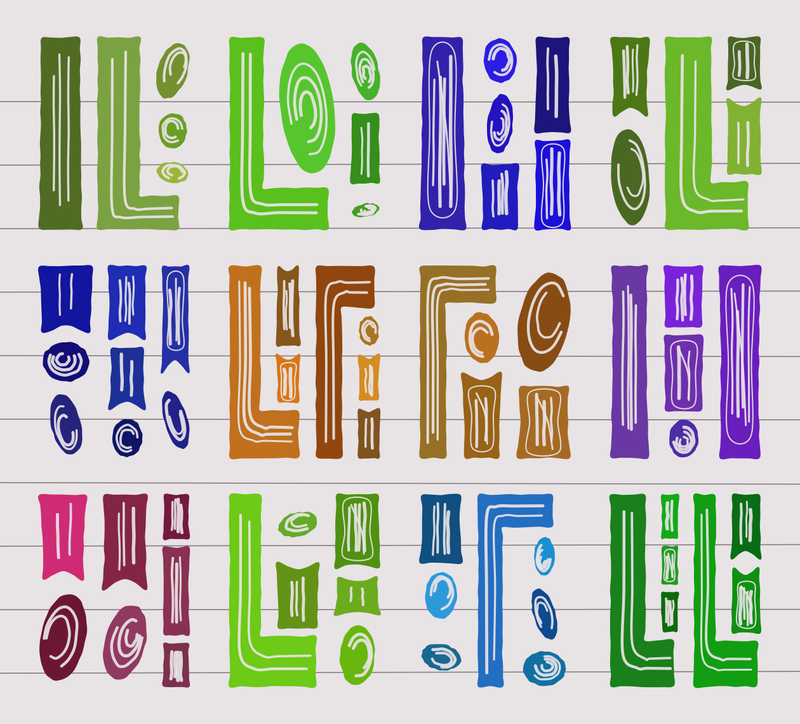
It can also draw just the outlines:
Space city
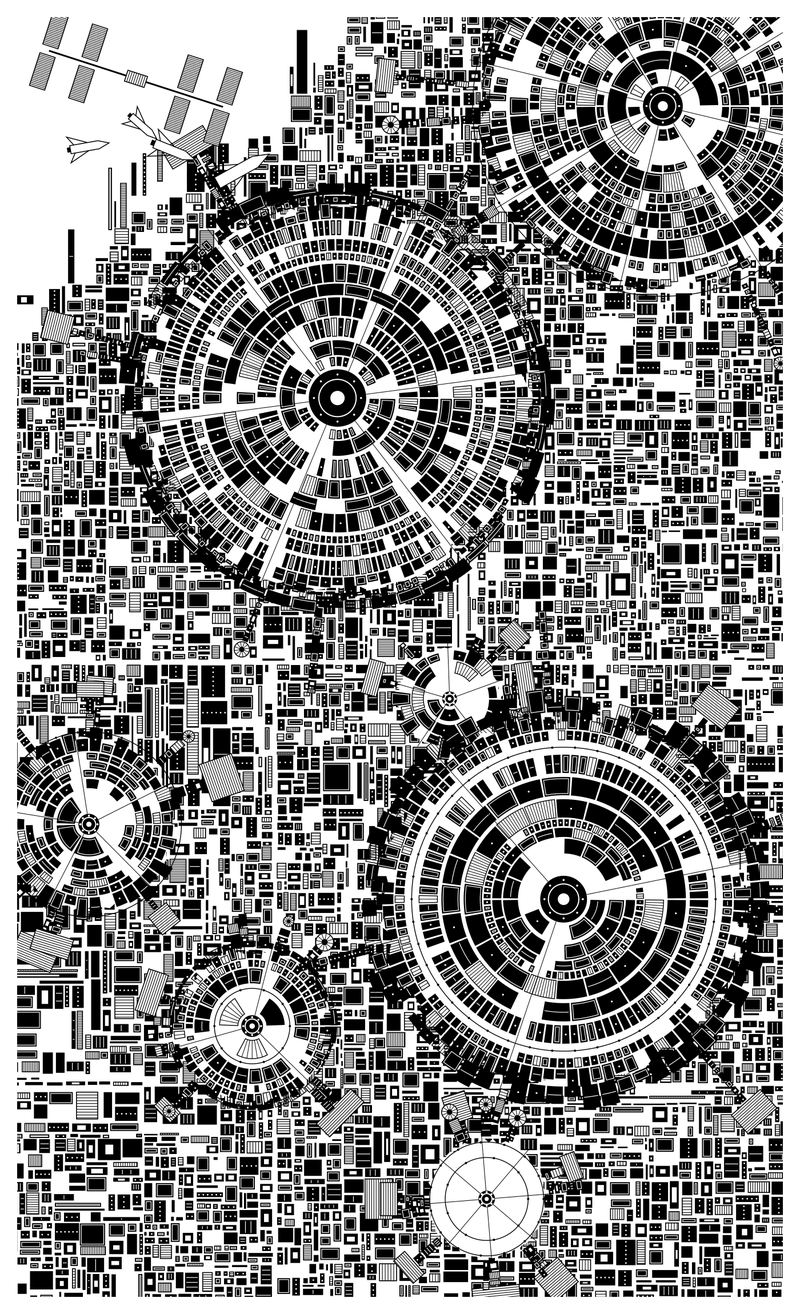
And space_city.py draws a pen-and-ink city of enormous radial hubs, with solar panels, shuttles and a space station drifting past in the corner of the sky. If you don’t give it a seed it uses the date and time, so every second has its own city.
And some fractals
The repo does still do fractals. There are four new scripts.
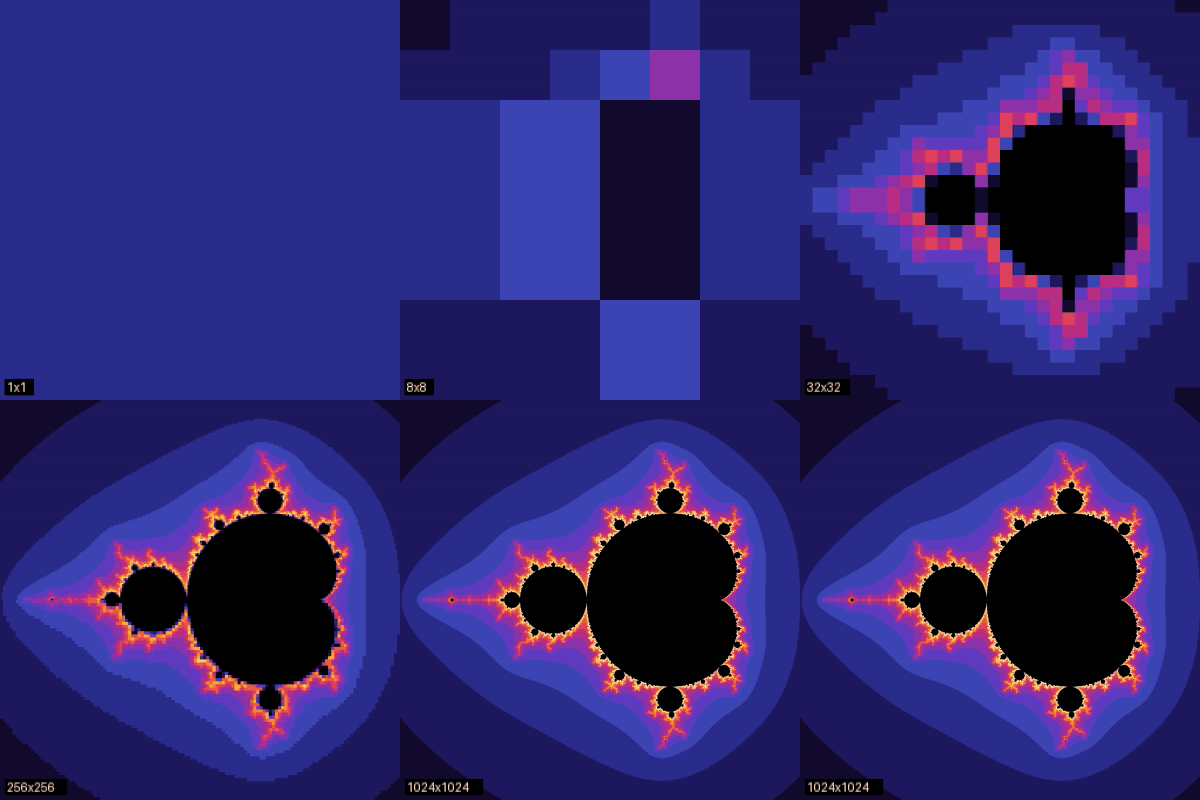
pixel_resolve.py makes a video that starts as one giant pixel and splits into 4, 16, 64 and so on up to 1024×1024, in 16 colours. It’s the same idea as MANDEL2 on the BBC Micro, but each block is the average of everything under it rather than the colour of its corner. In quadtree mode, only blocks that still hide some detail get split. By the last level of this one, that’s 62,048 of the million or so pixels.
 |
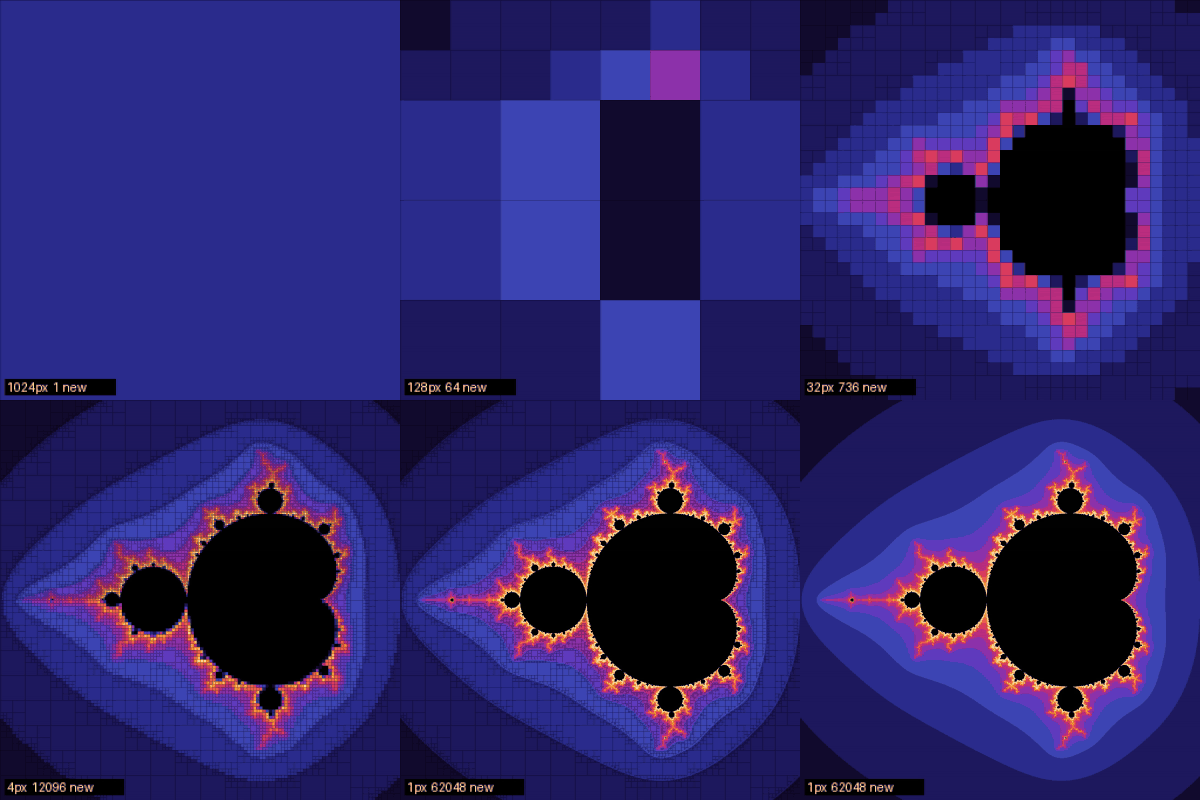 |
| Grid | Quadtree |
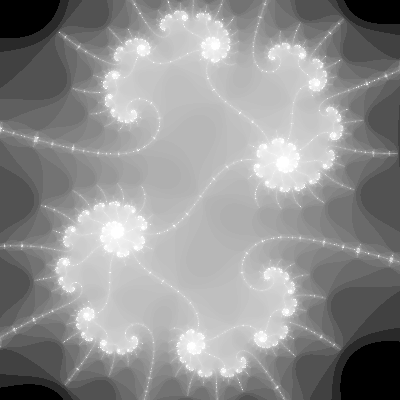
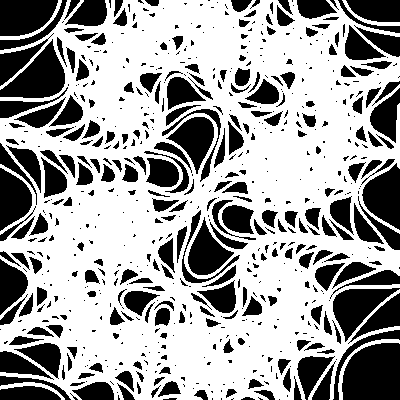
fractal_tile.py turns a view of the set into an STL file for a 3D printer, as a terraced relief, raised line art or a lithophane to hold up to the light. These are its height maps of the spot the zoom video dives into, where brighter is taller:
 |
 |
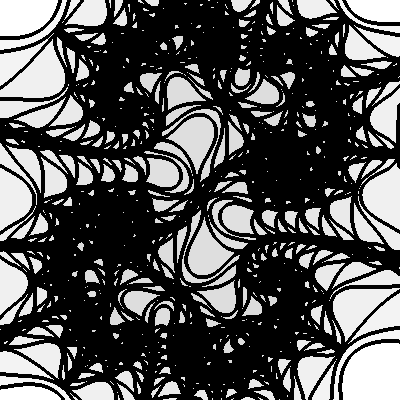 |
| Relief | Lines | Lithophane |
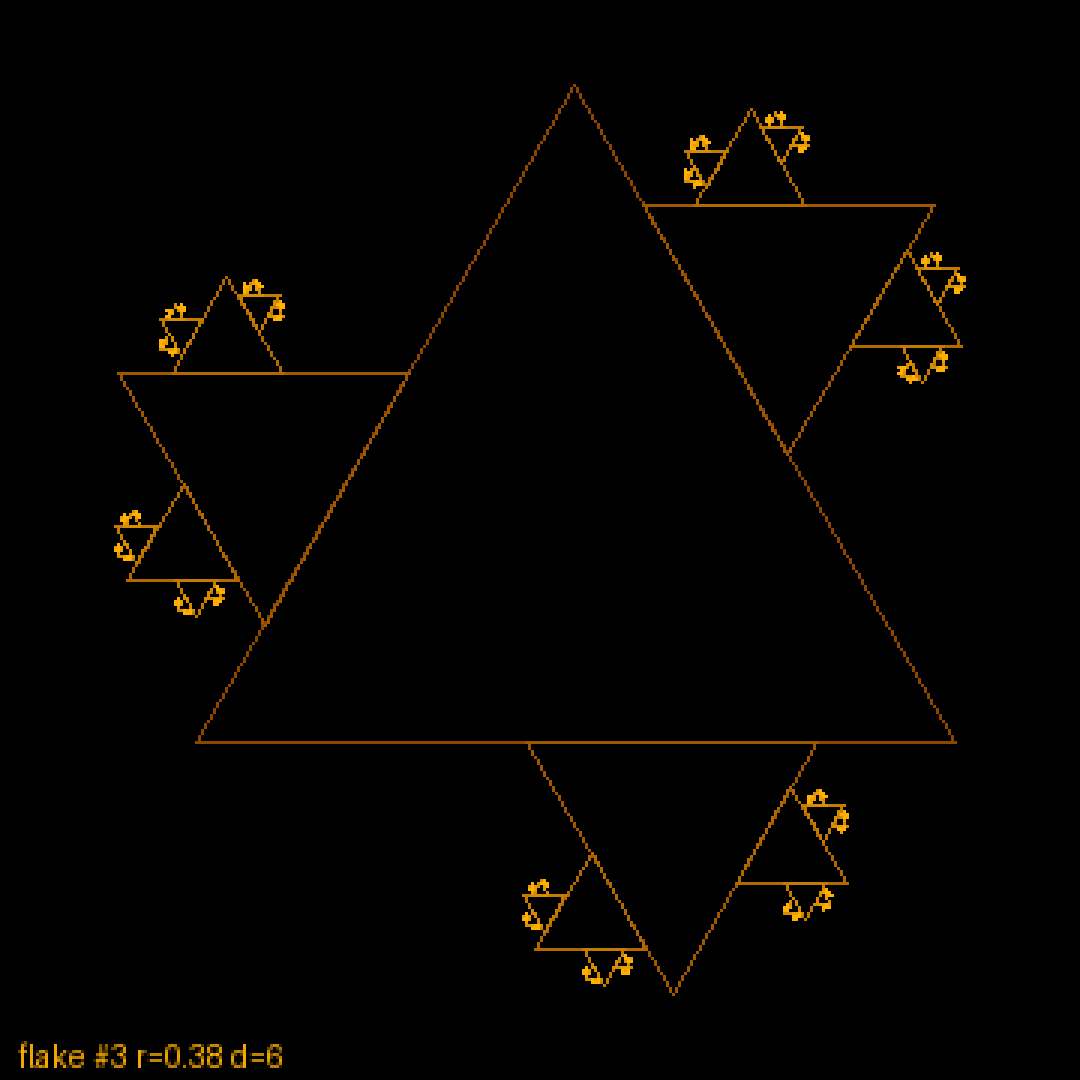
triangle_flake.py joins the Koch curves, Pythagoras trees and attractors. Each triangle sprouts a smaller one from the middle of each side, and so on down.
Last is mandelbrot_numba.py, a short script that renders the whole set at 1920×1080.
Trying it yourself
Everything is in the repo, and the README lists all the options:
git clone https://github.com/alastairhm/fractals
cd fractals
python3 -m venv python/.venv
source python/.venv/bin/activate
pip install -r python/requirements.txt

python mazes/maze.py --algo all --seed 3
python mazes/cat_maze.py -o cats.png
python "City Map Generator/citymap.py"
python glyphs/glyphs.py --lines --png glyphs.png
python space_city/space_city.py
pixel_resolve.py also needs ffmpeg, and you may need a C compiler and the cairo library for the space city.