Musings of an aging computer nerd hitting 0x32.

Zazzle Shop Prints, Tshirts and mugs
(c) Alastair Montgomery
Musings of an aging computer nerd hitting 0x32.
Zazzle Shop Prints, Tshirts and mugs
(c) Alastair Montgomery
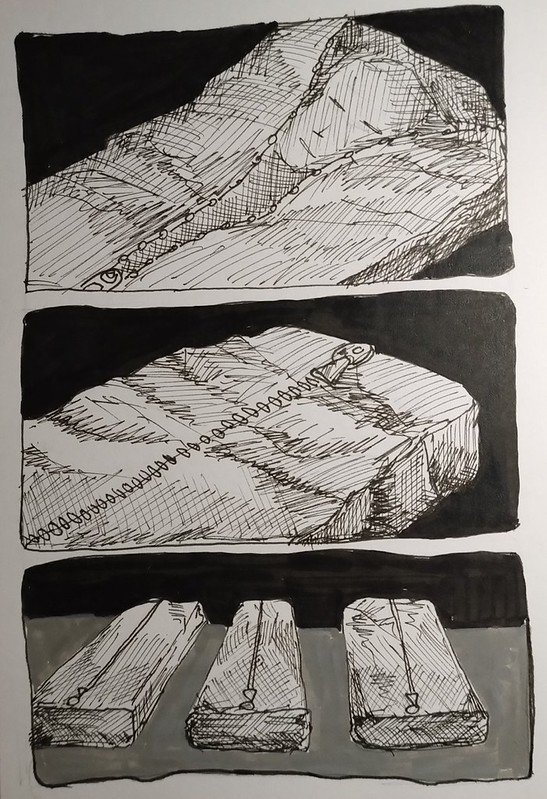
Inktober 2026 26, Zip
We watched it close behind us. Through the viewport the fracture no longer looked like lightning. It looked like a seam. Far back along its length the ragged edges were drawing together, tooth meshing with tooth, a line of dark links running away across the folded skin of space. Somewhere at its head a single bright slider hauled itself along, and the universe zipped shut after us without a sound.

Inktober 2026 25, Fracture
Somehow, everyone fitted. Survivors, hero, robot, even SOSi, bolted down in a corner with its dish still ticking. The ramp sealed with a soft sigh, and the dapper man lifted a hand to a panel we couldn’t read.
We didn’t feel a thing. No shudder, no thrust, no pressing back into the seats. Through the viewport the wreck simply slid away, as though the plain were being pulled out from under us.

Inktober 2026 24, Bake
Nobody had eaten properly in days. Ration bars, warm water, the dust in everything. So when the robot ducked back into the silver ship and came out carrying a loaf tin, we just stared.
It set up in the lee of the wreckage, using a slab of torn bulkhead as a counter, and went to work with those blunt pincer hands, surprisingly delicate. Dials ticked on its chest panel. Something warm hummed inside its torso. The dapper man stood by with his hands behind his back, looking quietly pleased with himself, as if this had been the plan all along.